
Household buying guides · Ahmedabad, Gujarat
Wood-Pressed vs Refined Oil: An Ahmedabad Shopper’s Label & Price Guide
By Triloknath Traders · 19 October 2026
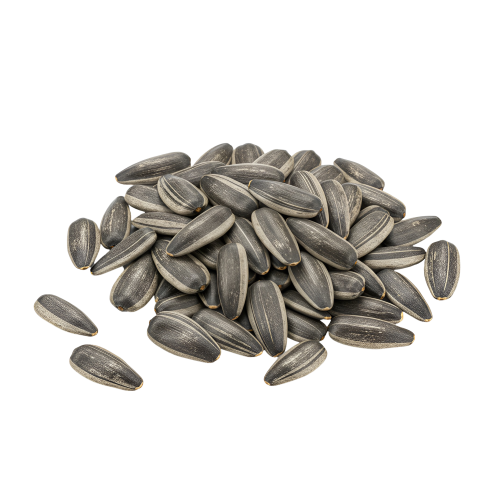
Quick answer: Choose cooking oil by its declared oil type, processing method, intended cooking use, pack information and price per litre. Wood-pressed, cold-pressed and refined are not interchangeable claims. A processing label alone does not establish that an oil is organic or universally healthier.
What is the difference between pressing and refining?
Pressing describes extracting oil mechanically, while refining describes further processing of an oil. Cold-pressed is a specific processing description; a wooden press or traditional-looking package alone does not verify how a particular oil was made.
ICMR–National Institute of Nutrition’s dietary guidance distinguishes crude, virgin and cold-pressed oils. It explains that processing can affect retained components, while also discussing undesirable compounds and safe use. That is a reason to compare the actual oil and its label rather than treating one marketing phrase as a complete quality assessment.
Is wood-pressed oil always the healthier choice?
No universal health conclusion follows from the phrase wood-pressed alone. Consider the oil source, its composition, quality information, cooking use and your overall diet. For a personal medical or dietary requirement, use guidance from an appropriate qualified professional.
Do not assume that refined means adulterated or that an unrefined oil cannot have quality problems. Similarly, do not infer organic certification from terms such as kachi ghani, natural or traditionally made. Ask what each claim means for the actual pack and which records support it.
What should you compare on the label?
Start with the named oil, net quantity, manufacturer or packer details, date information and storage instructions. If the oil is sold as wood-pressed or cold-pressed, ask for a clear processing description. Check the exact product rather than relying on an illustration of seeds or a wooden press.
For a blended product, read the declared composition rather than treating it as a single-ingredient oil. If you require organic status, request the documentation for that item. A business licence identifies a food business; it does not by itself resolve every product-processing or organic-certification question.
How do prices compare fairly?
Compare price per litre when both products are sold by volume. Divide the final product price by the number of litres, then account separately for delivery. If one product is sold by kilograms, do not assume its kilogram price is directly comparable to a litre price.
For example, a one-litre bottle priced at ₹290 works out to ₹290 per litre before any separate delivery charge. This is an arithmetic example based on the current Triloknath Groundnut Oil, 1 litre listing, not a promise that the oil is wood-pressed. Check the current price and processing information on the product before ordering.
The catalogue also has a 5-litre groundnut oil pack. Calculate its unit price independently instead of assuming a larger pack always gives a discount. Compare the same oil specification and include how quickly your household expects to use the pack.
What about cooking and storage?
Follow the supplier’s stated cooking uses and the label’s storage instructions. Do not choose a high-temperature cooking method solely because an oil is marketed as premium. Ask for clarification where the product information is incomplete.
ICMR–NIN warns about deterioration associated with repeated heating of cooking oils. Avoid treating repeatedly reheated frying oil as equivalent to fresh oil. For an unopened or opened household pack, keep its date information available and follow the product’s stated conditions rather than applying a generic shelf-life claim to every oil.
What should you ask before ordering in Ahmedabad?
Send the oil name, preferred pack size, quantity and delivery pincode. Ask for the current label, processing method, price and final delivery total. A clear question about a specific product gets a more useful answer than a general request for the best healthy oil.
Explore the oils and ghee collection and read the delivery and ordering guide. Triloknath Traders handles domestic retail enquiries from its Thaltej office; visits and pickup should be arranged beforehand.
Reference: ICMR–NIN Dietary Guidelines for Indians, 2024. Read the source’s discussion of oils and fats in its dietary context.
Choose with clear product information.
Send the product, pack size, quantity and delivery pincode for current details.
Enquire on WhatsApp ↗